
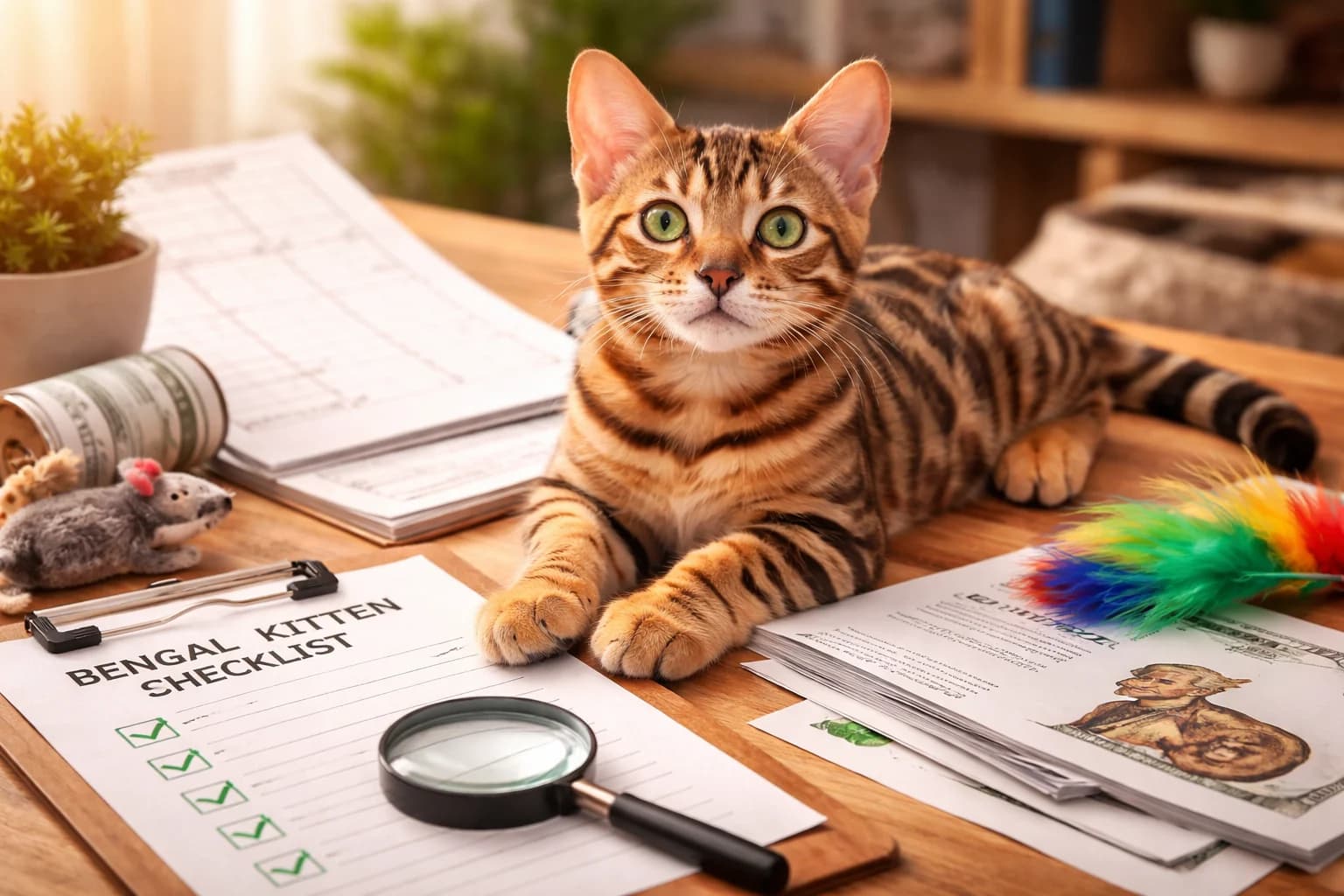
9 steps to choose a Bengal kitten
So, you’ve decided that you want a Bengal cat in your life. Wonderful! But choosing a healthy Bengal kitten as your new best friend is not always easy. From the specific details of the breed that can affect your decision to finding the right breeder, there are many things that can make adopting a Bengal kitten a stressful process.
To make it easy for you to find a Bengal kitten you will completely fall in love with, I created this comprehensive guide to help you save your time and nerves. So, without further ado, here is everything you need to know — 9 steps to help you find healthy Bengal kittens for sale!
Step 1. Choosing the right generation
When you decide to buy a Bengal kitten, it is important to determine which generation branch is right for you. There are two main generation groups — foundation Bengals F1 (also called early generation) and SBT Bengals (Stud Book Tradition) — a purebred Bengal that is at least 4 generations removed from the ACL, meaning that for at least 4 generations all the animal’s relatives were Bengals.
All Bengal cats have similar traits: beautiful spotted coats, a lean and strong build, cute faces, and a delightful personality. However, because earlier generations of Bengals are closer to their wild cat ancestors, their appearance and temperament are in many ways more similar to the Asian leopard cat than in the case of SBT Bengals. F1 Bengals are not even recognized as pets, and they are usually kept for breeding by experienced owners.
Most Bengal breeders offer only SBT Bengal kittens for sale, as they are more suitable as pets. Kittens show all the characteristics of purebred Bengal cats: they are intelligent and playful, communicate well, and have a recognizable leopard coat. Once you determine which Bengal generation fits your lifestyle, you should think about which pattern type and color you prefer.
A good place to start is by learning about Bengal types and the variations in their appearance. Although the first thing that comes to mind when you think of Bengals is a lush beige-brown coat with dark spots, the breed has differences in both patterns and colors.
Step 2. Decide what kind of Bengal kitten you want to buy
The two main pattern types are spotted (or rosetted) and marbled. Markings are unique to each Bengal, but always in one of these two patterns. When it comes to Bengal coat color, the two most popular are brown or white (Snow Bengals). Shades range from warm golden tones to creamy white. Some Bengals have a beautiful, shimmering coat sheen called glitter.
Step 3. Choose a reputable breeder
By now, you have probably decided which Bengal color type appeals to you most, and it is time to find the right breeder. In order for your new Bengal kitten to be healthy and have a good pedigree, you need to find a reputable cattery. There is always a lot of negativity toward breeders of any kind. Even the most trustworthy Bengal catteries face the same negativity thanks to the large number of dishonest backyard breeders.
However, what many people do not understand is that choosing a Bengal kitten from an official cattery is not like buying a pig in a poke, as is the case with dishonest breeders. A reputable breeder is very careful when selecting breeding pairs. Their main goal is to promote and improve the Bengal breed through genetic selection. They genuinely care about the health and quality of the cats they produce. When you start looking for a Bengal, it can feel a little overwhelming.
There may be many breeders in your area to choose from. There may be only one or two. You may find that there are no local breeders nearby and that you will have to travel. Here are some tips when researching breeders:
Step 4. How to communicate with Bengal breeders
- Find out whether the kittens you are considering are registered with TICA or WCF?
- Are they sold with full breeding rights and show rights, or sold only as pets?
- Will they be spayed/neutered before leaving for their new home, or are they sold under a strict spay/neuter contract?
- Have the parents undergone genetic and medical testing, such as screening for PK or HCM, FIV/FELV tests, are they FCoV-free, and are stool tests regularly performed for kitten health? — Have the kittens had a health check with a veterinarian?
- Do they match the photos by age?
- Where are the kittens raised? At what age does the breeder release the kittens to their new family? What food do they eat? What litter is used?
These are all EXTREMELY important questions to ask the breeder before visiting their home or cattery. A responsible Bengal breeder will not hesitate to answer questions that may seem even the most intrusive about their breeding practice. This information will also help you separate backyard breeders from reputable ones. Reputable breeders most often sell their kittens as “pet only,” meaning they will be sold only under a strict contract.
Some kittens considered above average in quality may be sold for show or breeding. Backyard breeders release their kittens without caring about their future. Reputable breeders also regularly test their queens and studs for genetic and health problems before breeding to ensure that the kittens they produce are high quality and genetically healthy. Backyard breeders do not do this.
When you physically see the cats and kittens, always watch for issues such as sneezing, runny noses, sore eyes, signs of diarrhea, and dirty living conditions. These are unacceptable indicators for any principled breeder and may point to a possible serious problem such as FCoV. (feline coronavirus) Reputable breeders will always stay away from dishonest ones. They will follow TICA litter rules, limiting cats to only 2 litters per year.
Backyard breeders will not be affiliated with TICA and will not follow strict breeding rules. When looking for a breeder online, reviews are always helpful. Look for a breeder with good reviews from past kitten buyers. Beware of breeders with several negative reviews, especially if those reviews mention health issues, illness, or deaths.
Step 5. Finding a litter
After you have made a list of questions, you can email or call the breeder, depending on what information they display in their profile. Let them know of your intention to buy a Bengal kitten and your preferences regarding generations, as well as markings and colors. Ask the breeder whether they have kittens available or whether they are expecting a new litter soon.
Since TICA rules ensure that a queen (Bengal mother) may have only 2 litters per year, it is not uncommon to reserve kittens even before they are born.
Step 6. Conducting a background check
If the breeders on your list do not currently have Bengal kittens for sale, or there is no kitten you were looking for right now, do not hesitate to ask whether they can recommend another local breeder. This will expand your initial list and give you a few more options to choose from. There is a chance that you will not find the right kitten right away. Sometimes the breeder you choose will not have kittens that match your preferences, or they may not be available at the moment.
But once you find a Bengal litter that suits you, it is very important to make sure the kittens were bred according to the basic principles of the feline system in which they are registered. You will need to learn about the litter’s parents and look at the parents’ most recent litters to see what to expect, especially if you reserve kittens that have not yet been born. Ask the breeder for photos of the parents, or even better, ask to meet them.
Genetic makeup should play a role in your decision-making. After all, kittens will get most of their traits from their parents. Depending on the breeder, cats may be kept at home or in a cattery. In either case, they should provide appropriate living conditions for their cats. If the kittens come from a place where they are not cared for and socialized properly, you risk many problems with your new pet.
This includes various diseases and illnesses that the kitten may pick up from breeders, or behavioral problems that will later be difficult to correct.
- Behavior.
- Health.
- Conformity to the breed standard.
As mentioned earlier, it is not enough to find a litter that meets your criteria from a reputable breeder. To truly make sure you take the right Bengal kitten home, you will need all the information about the parents. And you can get it only in person. Although a TICA certificate should be provided, it is not enough to help you choose a litter.
This means that the breeder has registered the kittens and that they meet the International Cat Association criteria for Bengal cats. The only way to make sure you are choosing the right litter is to meet both the queen and the tom, as well as the kittens. That way, you will have your own impression of your future pet, and you can determine whether the parents’ personality and appearance are what you would like to see in your Bengal kitten.
If you are not sure what to look for, here are three main qualities you should pay attention to if you are going to buy a Bengal kitten:
Step 7. Choosing a litter
Bengals are known for their energetic, playful nature, and that is one of the reasons people choose them as pets. However, if they are not socialized in time, or if they are neglected, they can become difficult to handle. When you visit the breeder and meet the parents, pay attention to their behavior. Naturally, a Bengal cat with her kittens will not be the friendliest, but you should still be able to tell whether the cats are socialized and what their personalities are like.
If you notice unusual aggression, unstable behavior, or a strong litter box smell, consider it a warning sign. Although choosing a reputable breeder should minimize concerns about the litter’s health, that does not mean you should not double-check. Ask the breeder about vaccinations and deworming records, as well as the results of the parents’ genetic screening.
This will help you determine whether the kittens in the litter are predisposed to any disease and make sure you are getting a completely healthy pet. Although Bengals share common traits, no two cats are exactly alike. But all purebred Bengal cats with documented pedigree have similar traits that are the result of good lineage.
Checking whether the kittens (as well as their parents) meet breed standards is especially important if you plan to show your Bengal kitten. Each cat pictured should have typical Bengal traits, including markings and coat color, a lean body, and an excellent head (more on the TICA website https://www.tica.org).
Step 8. Boy or girl?
When you are set on buying a Bengal kitten, choosing just one litter can be difficult, especially if you have spoken with several good breeders who turned out to have available Bengal kittens. If that happens, you should take other aspects into account before making a decision. First of all, make sure the breeder is always ready to help.
This can make a huge difference, especially in those first few days with your new kitten, if you have a breeder you can rely on for all your needs. A good Bengal breeder should be available, answer any questions you have, or give advice when needed. It is also important that the contract specifies any conditions in case things do not go as planned. Having a way to stay in touch is very important, and in the beginning the breeder can be invaluable.
Of course, the litter should meet the standards mentioned in the previous sections, from health to environment. The breeder plays an important role in the further development of your Bengal kitten. If the kitten is socialized in time and receives extra care during this delicate period of life, there is a good chance it will grow into an attractive, healthy Bengal cat.
Step 9. Choosing a healthy Bengal kitten
In some cases, people already have a preference regarding the kitten’s sex, but most often there is a significant amount of misinformation influencing the decision. Some people think female Bengal cats are more loyal or that males are more troublesome, but that is simply not true. Every Bengal cat has its own character, regardless of sex. The aspects where the cats’ sex will matter are whether you plan to breed them in the future or not.
If not, you need to take spaying and neutering, as well as the costs, into account. Spaying a female is more complicated and therefore more expensive than neutering a male. As with most species, male Bengals are a little larger than females, but beyond the minimal difference in appearance, you will find that both sexes are equally attractive.