
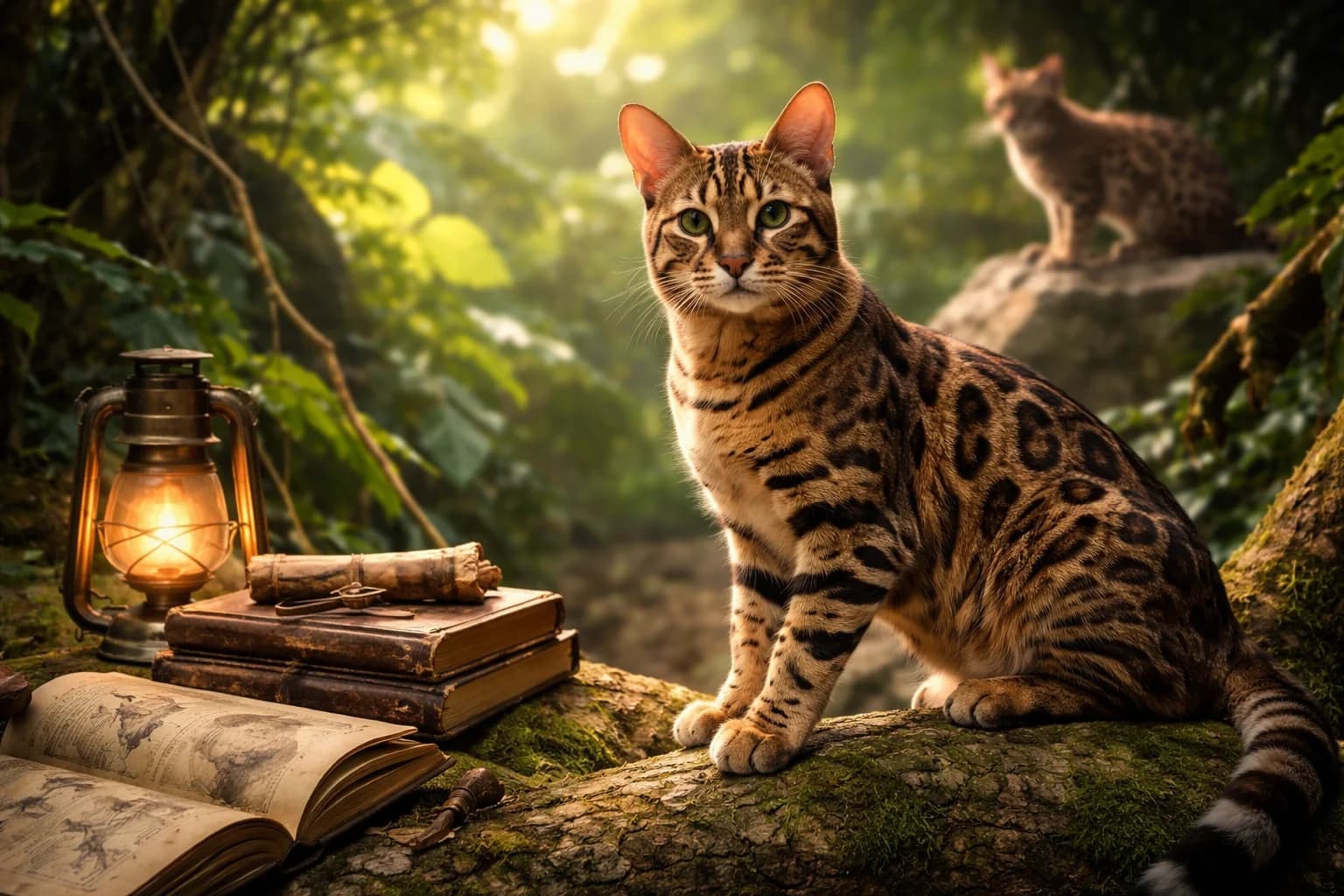
Breed History
The history of the Bengal cat began in the USA in 1961. The breed’s creator was Jean Mill (then Sugden). Jean was a genetic biologist. During her student years, she was interested in cat breeding. One of Jean’s last projects was the possibility of crossing Siamese and Persian cats. After graduating from university, Jean continued breeding work with Persian cats. She was one of the first to support the breeding of Himalayan cats.
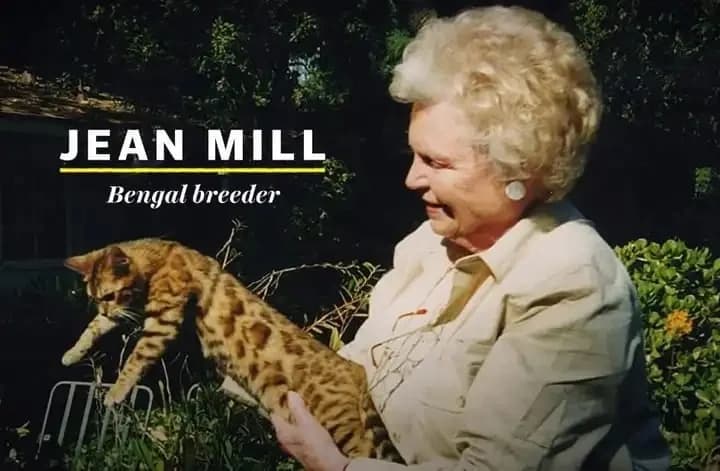
In 1961, Jean Mill was on a business trip to Bangkok, Southeast Asia. The nature of this region was the natural habitat of wild cats Felis Bengalensis, similar in size to domestic cats. At that time, this species was on the verge of extinction due to poaching; adult animals were exterminated because of the value of their skins, and small kittens were sold to tourists at the local market as live souvenirs. Jean bought a kitten and brought it to the United States, naming the cat Malaysia.
Raised in a home environment, Malaysia had the character of a wild animal. She was distrustful, cautious, felt no attachment, and did not make contact, preferring solitude, although she did not show aggression. Malaysia would climb somewhere higher to sleep in order to be out of reach. Nevertheless, during her cycle, Malaysia received courtship from a black domestic cat that lived with Jean.
As a result of this mating, to everyone’s surprise, in 1963 a viable healthy hybrid kitten with spotted markings inherited from its mother, named Kin-Kin, was born. Jean decided to breed cats that looked like exotic forest predators but had the temperament of domestic pets. So, when Kin-Kin grew up, in the absence of other candidates, she was mated with the same black domestic cat.
Jean’s work on creating a special cat was interrupted by the death of her first husband. Malaysia was taken to a zoo, and Kin-Kin died after failing to recover from pneumonia. Fifteen years later, Jean (now Mill) learned about a comparative study of the immunity of wild and domestic cats at a laboratory at the University of California, USA. During the study, scientists found that some wild cats have immunity to the feline leukemia virus.
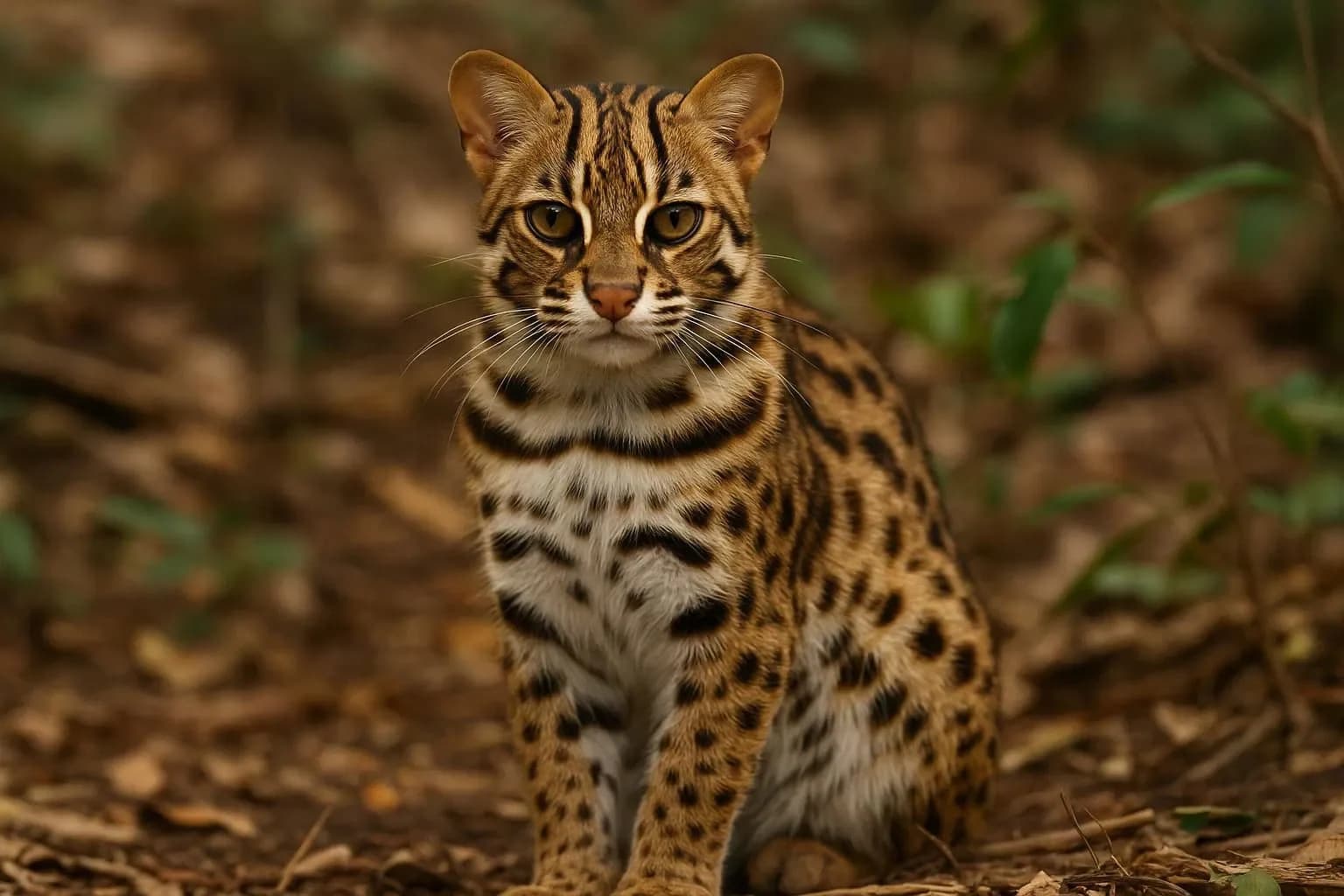
It remained to be determined whether this immunity was innate or acquired during a cat’s life in the wild. For this purpose, interspecies crosses of wild leopard cats and domestic cats of different breeds were carried out. Jean Mill asked the head of the research group, Willard Centerwall, to give her several first-generation hybrid females (F1), and she received 9 females. Since then, she began serious work on creating a domestic, in the full sense of the word, Bengal cat.
During the development of the breed, F1 hybrid females were mated with domestic cats of different breeds, including Burmese and Mau. In 1982, Jean successfully acquired a small wild cat with a spotted golden-orange color, which had never been seen in domestic cats. She met him in one of the zoos in New Delhi (India). In fact, the kitten had no tail — rhinos crushed it.
Bringing the cat home, Jean nicknamed him Delhi and registered him with the CFA (Cat Fanciers’ Association) as an experimental Mau. After growing up, Delhi became the most suitable mate for Jean’s cats. All kittens born from him had an amazing sheen to their coat, the so-called glitter, which was attributed to the Bengal breed. Jean continued to work actively on creating the cat of her dreams. The difficulty was that males of the first three hybrid generations were 70–80% sterile.
In addition, not all kittens had beautiful leopard rosettes. Jean involved wild Bengal cats from India in her breeding work. In 1991, Bengal cats took part in the TICA championship for the first time. Jean Mill showed the world a gentle, affectionate creature enclosed in a wild coat. To this day, the Bengal breed is recognized by almost all felinological organizations.
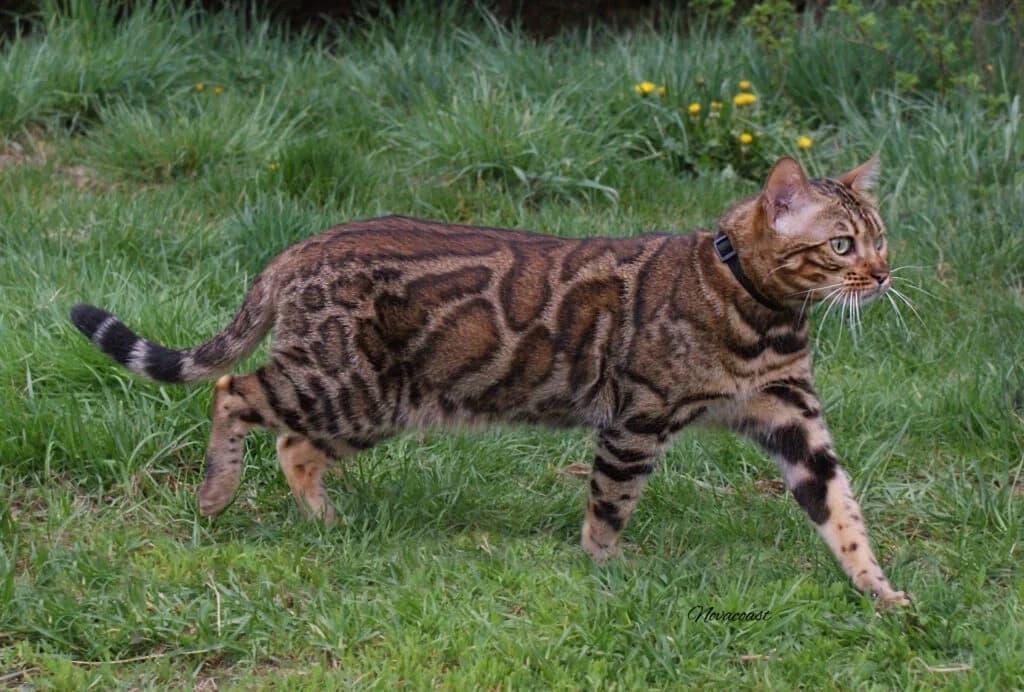
The unusual coat color for a domestic cat attracts representatives of this breed, each of whom tries to choose a Bengal cat with the best natural characteristics. Rich black or chocolate spots on a golden-orange background catch the eye. The coat of Bengal cats feels like valuable fur — dense, short, and soft. The body is muscular, strong, elongated, with strong bones, small eyes on a large head, and powerful legs (the hind legs are longer than the front ones).
The short thick tail resembles a fluffy tube with a black tip. Females are more slender and elegant, males are stronger and more muscular. Bengal movements are full of grace. In every respect, they resemble leopards. As in any breeding work, at the very beginning of the development of the Bengal breed, cats of different breeds were used in the hybridization process. Thus, later Bengal blood carried in its genes some traits inherent to other cat breeds.
Many of them were eliminated, but some made themselves known. One such trait, for example, is the long coat of Bengals. Initially, such animals were excluded from breeding work. However, for several years now, such a coat has been attracting growing interest from breeders and admiration from cat lovers. Long-haired Bengals are now called cashmere or silk Bengal.